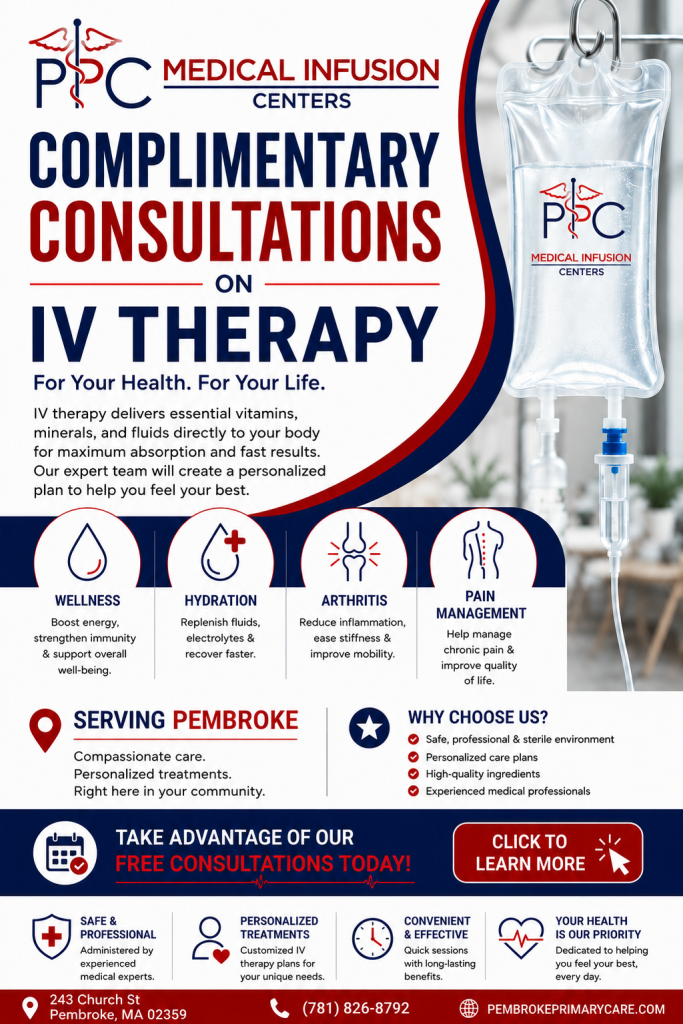

Dehydration can leave you feeling unwell. IV hydration may help when clinically appropriate, but treatment starts with understanding the cause and whether intravenous fluids are needed.
If you are researching IV hydration near Quincy and the South Shore or IV hydration therapy near Plymouth and Kingston, MA, this guide explains candidacy, appointment preparation, and what to expect.
Pembroke Infusion Center offers outpatient services at its Pembroke location, with treatment based on a clinical assessment of your needs.
Recognizing Dehydration and When to Get Help
Dehydration develops when fluid losses exceed fluid intake. Heat, sweating, vomiting, diarrhea, and difficulty drinking during illness can contribute. Symptoms may include thirst, a dry mouth, reduced urination, darker urine, and headache.
Fatigue or lightheadedness can have other causes as well, so do not assume an infusion is the answer without an evaluation. Your clinician may review symptoms, vital signs, medications, and relevant medical conditions, and may recommend testing.
Confusion, loss of consciousness, or suspected heatstroke requires emergency care. Markedly reduced urination, inability to keep fluids down, or worsening symptoms also warrant prompt medical attention. Severe dehydration may require hospital treatment rather than a scheduled outpatient wellness visit.
What Is IV Hydration Therapy?
IV hydration delivers a prescribed fluid solution through a small catheter placed in a vein. Depending on your needs, the solution may contain electrolytes, and your clinician may discuss additional ingredients. The fluid type, amount, and administration rate should suit your medical history and current condition.
For mild dehydration, drinking fluids may be sufficient. Oral rehydration solutions can help replace fluid and electrolyte losses when appropriate. IV treatment may be considered when oral intake is inadequate or a clinician identifies another reason to use intravenous fluids.
Discuss heart or kidney disease, fluid restrictions, pregnancy, and all medications before treatment. These factors can influence whether an infusion is appropriate and how it should be administered.
Hydration, Vitamin Infusions, and Wellness Expectations
IV hydration and vitamin infusions are related services, but they address different needs. Replacing lost fluids may improve symptoms caused by dehydration. Adding vitamins does not automatically make an infusion more beneficial.
Evidence supporting broad claims that wellness vitamin drips boost immunity, sharpen mental clarity, or improve energy in otherwise healthy people is limited. Most people can obtain necessary nutrients through food, and selected deficiencies may be managed with oral supplements or other prescribed treatment.
Ask why each ingredient is included and what benefit is realistic. Persistent fatigue deserves an assessment of its cause.
Preparing for IV Hydration Near Plymouth and Kingston
Before your appointment, follow the center’s instructions about food, fluids, and medications. Do not change prescribed medication or exceed a fluid restriction to prepare for an infusion. Ask whether eating a light meal is appropriate for you.
Bring a list of medications, supplements, allergies, and relevant medical conditions. Mention recent illness and any change in symptoms since booking. Wear clothing that leaves your arm accessible and bring a book or headphones if you would like something to do.
Confirm the appointment location, total time to reserve, and cost before you arrive. Ask whether the quoted price includes assessment, fluids, optional ingredients, and any required tests, and whether insurance covers your specific treatment.
What Happens During Your Appointment?
The team reviews your history and proposed treatment before starting the infusion. This is your opportunity to ask questions about the solution, expected effects, and alternatives. A nurse then places an IV catheter, and fluids run at the prescribed rate while staff monitor your response.
Pembroke’s IV hydration service page describes infusions lasting approximately 30 to 60 minutes. Your visit may take longer for assessment, preparation, or observation, and the timing can vary with your treatment plan. Confirm the estimate when scheduling.
Staff remove the IV, check the site, and provide aftercare instructions. Resuming activities depends on how you feel and the condition being treated.
Possible Side Effects and Safety Considerations
An IV can cause tenderness or bruising at the insertion site. Other risks include infection, vein irritation, fluid overload, or electrolyte problems. Additional ingredients may carry their own risks, including allergic reactions.
Tell staff immediately if you experience increasing pain or swelling at the IV site, breathing difficulty, chest discomfort, or dizziness. Before leaving, ask whom to contact about concerns afterward and which symptoms require urgent care.
How Often Should You Receive IV Hydration?
There is no standard weekly or monthly schedule that applies to everyone. Some patients may need one episode of treatment, while others require a plan for a specific medical condition. Frequency should reflect a clinical need and response to treatment.
Travel, stress, or athletic training alone does not establish a need for regular infusions. Recurring dehydration warrants evaluation of the cause.
Choosing an IV Hydration Clinic Near Quincy and the South Shore
Look for a clinic with qualified medical professionals, a clear assessment process, and staff who explain both benefits and risks. Ask who oversees treatment, how patients are monitored, and how the team handles reactions or medical emergencies.
Coming from Quincy, Plymouth, Kingston, or elsewhere on the South Shore? Confirm directions, parking, and follow-up support before booking.
Schedule an Assessment at Pembroke Infusion Center
Pembroke Infusion Center is located at 243 Church Street in Pembroke and offers private treatment rooms and onsite medical staff. Call 781-826-8792 to ask about IV hydration services, discuss scheduling, and confirm whether an outpatient visit is appropriate for your needs.
For primary care evaluation of persistent fatigue, recurring dizziness, or other ongoing symptoms, contact Pembroke Primary Care in Marshfield at 781-826-3838.